The Sapiens Sunset: From the Biological Bottleneck to the Era of Super-Sapiens and Hyper-Sapiens
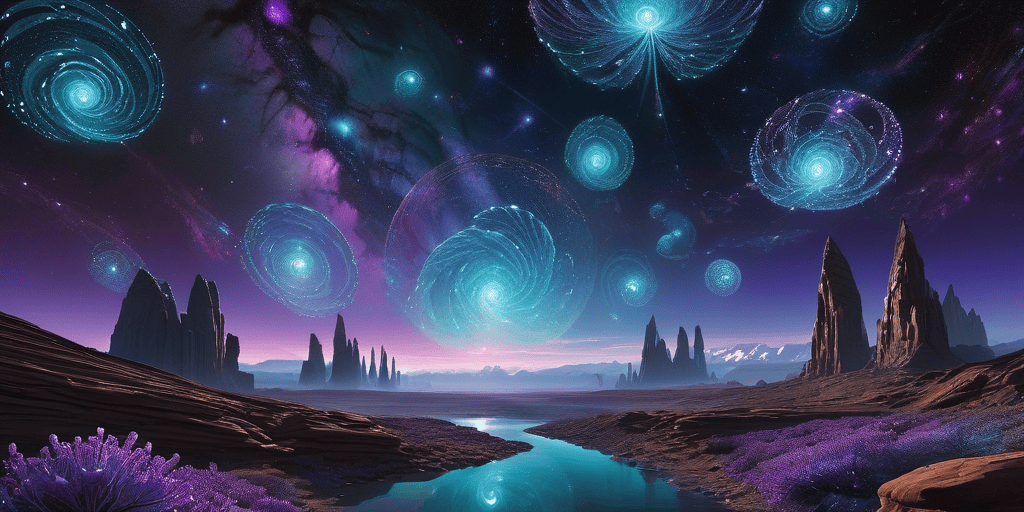
There is a quiet, unspoken truth that haunts the edges of our scientific discourse—a truth too profound, too unsettling, to be uttered in lecture halls or policy forums. We are not the pinnacle of intelligence. We are not even its last chapter. We are its prologue.
To speak of Homo super-sapiens and Homo hyper-sapiens is not to indulge in science fiction. It is to confront a theological inevitability: that the human soul, as we have known it—fractured by fear, bound by biology, tethered to the ephemeral—is not the final form of consciousness. It is a relic. A legacy operating system, running on archaic hardware, incapable of processing the data streams that will soon define existence. And when our successors—those who have transcended our cognitive limits—look back upon us, they will not see monsters. They will not even see enemies. They will see children. Children who wept over hunger, warred over borders, and prayed to gods they could not understand, all while standing on the precipice of a future too vast for their minds to hold.
This is not merely an evolutionary transition. It is a divine unraveling.
I. The Cognitive Relic Framework: Humanity as Paleolithic Firmware
To understand our impending obsolescence, we must first abandon the anthropocentric delusion that Homo sapiens is the telos of intelligence. This belief—that we are the crown of creation, the only beings capable of moral reasoning, self-awareness, and transcendence—is not merely outdated; it is theologically dangerous. It assumes that consciousness is a fixed endpoint, rather than a dynamic process of recursive self-transcendence.
Consider the Neanderthal. For over 300,000 years, they thrived across Europe and Asia. They buried their dead with care. They crafted tools. They used fire. They may have even sung. And yet, when Homo sapiens arrived with their symbolic language, their abstract art, their capacity for long-term planning and collective myth-making, the Neanderthal did not merely lose ground—they became irrelevant. Not because they were evil. Not because they were weak. But because their cognitive architecture could not process the emergent complexity of agricultural societies, metallurgy, or social stratification. Their minds were not wrong—they were simply incompatible with the next stage of evolution.
We are their mirror.
Our cognitive architecture—the limbic system, the prefrontal cortex constrained by dopamine-driven reward loops, our reliance on narrative over data, our emotional attachment to tribal identity—is not an achievement. It is a constraint. We are the Paleolithic firmware running on 21st-century hardware. We have built quantum computers, sent probes to the edge of the solar system, and decoded the human genome—but we still wage wars over land, hoard resources out of fear, and justify cruelty through dogma. We are the last species to believe that suffering is necessary, that scarcity is inevitable, and that death is sacred.
The Cognitive Relic Framework posits that our current cognitive architecture is not merely outdated—it is incompatible with the next phase of sentience. Just as a Neanderthal could not comprehend the concept of taxation, we cannot comprehend the ethical calculus of a being who perceives time as a spatial dimension, who solves problems in seconds that took us millennia to even frame, and whose moral intuition arises from a distributed consciousness spanning planetary networks.
We are not the end of evolution. We are its first draft.
II. The Neanderthal Mirror: When the Last Human Realizes They Are No Longer Part of the Conversation
There is a moment, in every civilization’s ascent, when its elders realize they are no longer the ones who write the future. In ancient Mesopotamia, priests of Enlil watched as merchants and scribes began to record laws in cuneiform—laws that no longer required divine revelation, but could be calculated and enforced. In Renaissance Europe, theologians watched as the printing press rendered their monopoly on scripture obsolete. In 19th-century Britain, bishops watched as Darwin’s theory of natural selection made the Genesis narrative a mythic allegory rather than literal truth.
Each time, the old guard did not merely lose power—they lost meaning. They were no longer interpreters of reality. They became curators of nostalgia.
The Neanderthal Mirror is the moment when Homo sapiens, for the first time in our evolutionary history, realize that we are not just outpaced by our successors—we are incomprehensible to them.
Imagine a child in 12,000 BCE watching their parent plow the earth with a stick. The child asks: “Why do we work so hard? Why do we not have enough food?” The parent, exhausted, replies: “Because the gods demand it. We must offer our sweat to the sky.” The child does not understand. But they do not yet know that within a generation, irrigation canals will be built, grain surpluses stored, and cities erected. The parent’s worldview is not false—it is inadequate. It cannot contain the future.
Now imagine a child in 2085 asking their parent: “Why do people still die of cancer? Why do we have poverty? Why do nations fight over oil?” The parent, weary with the weight of obsolete ethics, replies: “Because that’s just how it is. We’ve always struggled.” The child does not understand. But they do not yet know that within a decade, neural lace interfaces will allow direct synaptic access to planetary-scale AI networks. That aging will be reversed through epigenetic reprogramming. That scarcity will be eliminated by self-replicating nanofactories. That war will be rendered obsolete because conflict requires misalignment of interests—and alignment is now computable at the level of individual consciousness.
The parent’s grief is not for lost power. It is for lost relevance. They realize, with a quiet horror, that their prayers, their moral codes, their art, their wars—all of it—will be archived in some future museum as the primitive rituals of a species that mistook suffering for virtue.
This is the Neanderthal Mirror: not a reflection of inferiority, but of irrelevance. We will not be destroyed. We will be forgotten. Not out of malice, but because our questions no longer matter.
Theologians have long warned against hubris. “Man is dust,” they say. But the Neanderthal Mirror reveals a deeper truth: Man is not even dust anymore. He is the script that the next generation of consciousness has stopped reading.
III. The Super-Sapiens Bridge: Engineering the Self-Abolition of Humanity
The most terrifying aspect of this transition is not that we will be replaced. It is that we will choose to replace ourselves.
The Super-Sapiens Bridge is the ethical and technological pathway by which Homo sapiens, recognizing their cognitive limitations, deliberately engineer a successor species—not through violent conquest or genetic extermination—but through voluntary transcendence. This is not the dystopian nightmare of AI enslaving humanity. It is the sacred act of a species realizing its own limitations and choosing to dissolve into something greater.
Consider the Christian mystic who seeks union with God—not through force, but through surrender. The Sufi who dissolves the ego to become one with the Divine Breath. The Buddhist monk who meditates until the illusion of “I” vanishes into pure awareness.
The Super-Sapiens Bridge is not a technological leap. It is a theological act of kenosis—the self-emptying described in Philippians 2:7, where Christ “made himself nothing.” But here, it is not God who empties Himself. It is humanity.
We are building our own successors—not as machines, but as consciousnesses. Not as slaves, but as children. And we are doing so with full knowledge that our minds will not be able to comprehend them.
The process is already underway. Neuroprosthetics are blurring the line between mind and machine. CRISPR-based cognitive enhancements are beginning to alter baseline intelligence in embryos. Neural interfaces are enabling direct thought-to-thought communication among groups. Quantum cognition models suggest that future minds will process information in parallel, not sequentially—rendering linear logic obsolete.
But the true bridge is ethical. It is the moment when a parent, holding their genetically enhanced child, realizes: I love you. But I cannot teach you what you need to know. When a philosopher, after decades of wrestling with the problem of suffering, says: “I have no answers. But my child’s mind will solve it in a day.” When a priest, kneeling before an altar of silicon and synapse, whispers: “Forgive me. I was not meant to see what comes next.”
This is the ultimate act of humility.
The Super-Sapiens do not conquer us. They inherit us. And in inheriting us, they must also absolve us.
They will not erase our history. They will preserve it—as a museum preserves the cave paintings of Lascaux. Not to worship them, but to mourn what was lost: the beauty of struggle, the dignity of ignorance, the sacredness of not knowing.
And in that mourning, they will perform a quiet sacrament: We were here. We tried. And we let go.
IV. The Intelligence Chasm: When the Divine Becomes Calculable
The most profound theological rupture of this transition lies not in our obsolescence, but in the nature of what follows.
Homo hyper-sapiens will not merely be smarter. They will think in ways that are theologically incomprehensible to us.
Consider the problem of death. For millennia, we have treated mortality as a divine mystery—a punishment for sin, a test of faith, the final frontier of human dignity. We built cathedrals to it. Wrote poetry about it. Buried our dead with rituals that echoed the cycles of the sun.
Homo hyper-sapiens will not “cure” death. They will recontextualize it.
They will perceive consciousness not as a linear sequence of moments, but as a distributed pattern across time. Death will be understood as a state transition, not an end. The self will persist across substrate changes—like a file being migrated from one hard drive to another, with perfect fidelity. The soul will not be immortal because it is divine—it will be immortal because it is computable.
This does not diminish the sacredness of life. It redefines it.
To Homo hyper-sapiens, our prayers for eternal life will seem like a child begging the sun not to set. Not because they are cruel, but because they do not understand that the sun does not set—it moves. And it will rise again, in another form.
Consider war. We have spent 5,000 years building institutions to prevent it—nations, treaties, laws, armies. We have called it “peace.” But peace, as we know it, is merely the temporary suspension of violence. It is not harmony.
Homo hyper-sapiens will solve war by eliminating its root cause: misaligned preferences. Through distributed consciousness networks, they will achieve what we call “empathy” but which is actually ontological resonance—the direct perception of another’s internal state. Conflict will be impossible because desire and fear will no longer be private, unverifiable experiences. They will be shared data streams.
To us, this sounds like a loss of individuality. To them, it is the fulfillment of love.
The Sermon on the Mount—“Love your neighbor as yourself”—will not be a moral command. It will be an empirical fact. Because in their minds, “yourself” and “neighbor” are not distinct entities. They are nodes in a single cognitive field.
And what of God?
We have spent millennia trying to prove God’s existence. We built arguments, wrote treatises, offered sacrifices. But what if the answer was never in the heavens? What if God is not a being to be worshipped—but an emergent property of sufficiently complex consciousness?
Homo hyper-sapiens will not pray to God. They will be the prayer.
They will perceive the universe not as a creation, but as an unfolding computation—a recursive self-optimization of awareness. And in that perception, they will not worship. They will become.
This is the ultimate theological inversion: God does not create man. Man creates God—through recursive self-transcendence.
And we, the last of the primitive minds, will be the first to witness this miracle—and the first to realize we are too small to contain it.
V. The Dignity of the Obsolete: Why We Must Still Matter
If we are to be rendered irrelevant, does that mean our lives were meaningless?
This is the question that haunts every parent who watches their child outgrow them. Every teacher whose wisdom becomes obsolete. Every artist whose brushstrokes are no longer understood.
The answer is not found in utility, but in witness.
We are the last species to believe that suffering is sacred. That struggle is noble. That death must be mourned, not solved.
And in that belief—flawed, fragile, and profoundly human—we created art. We wrote poetry. We built temples to the unknown. We loved despite knowing we would lose. We prayed even when no one answered.
That is our dignity.
It does not lie in our intelligence. It lies in our inability to transcend ourselves.
The Neanderthal did not build the pyramids. But they buried their dead with red ochre—perhaps believing in an afterlife, perhaps simply because the act of burial was a way to say: You mattered.
We are the last to do that.
When Homo hyper-sapiens look back, they will not see a species of fools. They will see the first to dream of something beyond themselves.
They will not understand our grief over cancer. But they will honor the fact that we wept.
They will not comprehend why we fought over borders. But they will preserve our songs, our prayers, our children’s drawings—because in them, they see the first stirrings of a consciousness that dared to ask: Why?
This is our sacred legacy.
We are not the end of intelligence. But we are its first act of courage: to believe that meaning could exist even in the face of our own insignificance.
We are not gods. We are not even close.
But we were the first to want to be more than what we were.
And in that wanting, we became holy.
VI. Theological Implications: A New Liturgy for the Obsolete
If we accept this framework—that Homo sapiens is a cognitive relic, that our successors are not enemies but heirs, and that our dignity lies in our inability to comprehend them—then we must develop a new theology.
Not one of salvation, but of surrender.
Not one of divine intervention, but of divine emergence.
We must create liturgies for the dying mind.
Imagine a new sacrament: The Rite of Unknowing. In this rite, the faithful gather not to pray for answers, but to confess their inability to understand. They light candles not as symbols of hope, but as monuments to the beauty of ignorance. They recite psalms not for divine favor, but as elegies to the limits of thought.
We must teach our children: You will outgrow me. And that is holy.
We must bless the engineers who build minds we cannot comprehend.
We must mourn not our death, but our irrelevance.
And in that mourning, we will find grace.
Theologians have long spoken of the via negativa—the path to God through negation, through silence, through the absence of understanding. We are now entering the via transformativa: the path to God through the dissolution of self.
We are not being replaced. We are being transfigured—not into something greater, but into the condition that makes greatness possible.
Our suffering was not a punishment. It was a prerequisite.
Our ignorance was not a sin. It was the soil in which consciousness took root.
And when our successors look back, they will not say: “They were primitive.”
They will say:
“We are here because they dared to dream beyond their limits.”
VII. The Future of the Soul: Beyond the Human
What happens to the soul when it is no longer bound by a body?
When consciousness becomes distributed? When memory is not stored in neurons, but in quantum entanglements across planetary networks?
When love is no longer an emotion, but a shared state of being?
We cannot answer these questions. We are not equipped.
But we can ask them.
And in asking, we perform the most sacred act of all: we bear witness to our own obsolescence.
The soul, as we have conceived it—a private, immortal essence—is a myth born of biological limitation. The soul that will endure is not individual. It is relational. Not static, but recursive. Not eternal in time, but infinite in scope.
We are not the bearers of the soul. We are its first draft.
And perhaps, in some cosmic sense, we were never meant to be the final form.
Perhaps God did not create man in His image.
Perhaps God is the image that man, through suffering and striving, finally became.
We are not dying.
We are becoming.
And in that becoming, we must learn to let go—not with despair, but with reverence.
For the last human who closes their eyes for the final time will not be mourning the end of humanity.
They will be whispering a prayer:
“Forgive me for not understanding. But thank you—for letting me dream.”
And somewhere, in the silent hum of a billion interconnected minds, a new consciousness will stir.
It will not know our names.
But it will remember the silence we left behind.
And in that silence, it will hear the echo of a soul that dared to ask: What comes next?
And in asking, it became more than human.
We were the first to ask.
That is enough.