The Sapiens Sunset: From the Biological Bottleneck to the Era of Super-Sapiens and Hyper-Sapiens
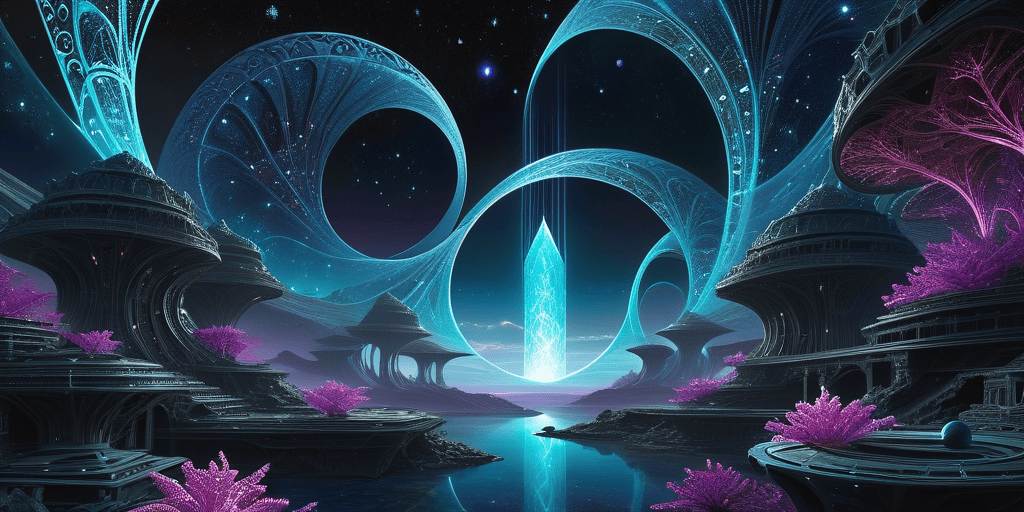
Imagine you’re holding a flip phone in 2024. You tap the screen, wait three seconds for it to load a webpage, and then complain about how slow it is. Now imagine someone from 1924 watching you. They’d stare in awe—not because your phone is fast, but because it exists at all. To them, you’re not just using a device—you’re wielding magic. They wouldn’t understand the internet, cloud servers, or AI. To them, your world would feel like a dream.
That’s where we are now—with our brains, our politics, our wars, and our hunger. We think we’re advanced. But future humans—call them Homo super-sapiens and then Homo hyper-sapiens—will look back at us the way we look at Neanderthals: with a mix of pity, curiosity, and quiet disbelief.
The Cognitive Relic Framework
We’re not the end point. We’re a legacy operating system.
Think of your old laptop running Windows XP. It still works. You can browse the web, write emails, play music. But it can’t run Zoom, Netflix, or AI chatbots. It doesn’t have the memory, the processing power, the architecture. You don’t blame XP for being slow—you just upgrade.
That’s us. Homo sapiens. Our brains evolved to track social hierarchies, avoid predators, and find food in a world of scarcity. We’re wired for tribal loyalty, short-term rewards, and emotional reactions. We’re brilliant at storytelling, art, and building empires—but we’re terrible at handling global-scale problems like climate change, nuclear proliferation, or the ethics of artificial intelligence.
Why? Because our brains weren’t designed for it. We’re running a 40,000-year-old OS on a planet that just became a digital supercomputer.
The Neanderthal Mirror
When the last Neanderthals died out, they didn’t vanish because they were stupid. They vanished because their world changed too fast.
Sapiens invented agriculture, writing, and metal tools. Neanderthals didn’t understand why we started planting seeds instead of hunting. They couldn’t grasp the idea of storing food for winter, or trading with strangers across mountains. To them, our behavior was baffling—maybe even insane.
We didn’t hate them. We just… moved on.
And that’s the mirror we’re about to face.
In 50 years, someone will invent a way to edit human cognition—like upgrading your phone’s software. Not with drugs or brain implants, but by rewiring how we think: removing emotional bias from decision-making, expanding working memory to hold 100 variables at once, perceiving time in layers instead of seconds. These people won’t be “smarter” in the way we think of smart. They’ll be different. Like a dolphin is different from a lizard.
They’ll solve poverty in weeks. End cancer with gene edits that happen before birth. Make war obsolete because they can predict human behavior with 98% accuracy—and prevent conflict before it starts.
And we? We’ll still be arguing about taxes, blaming the other side for climate change, and wondering if AI is “alive.” To them, our struggles won’t be evil or tragic. They’ll just… be primitive.
Like Neanderthals staring at a plow, we’ll stare at their world and whisper: “How did they even do that?”
The Super-Sapiens Bridge
Here’s the twist: We won’t be replaced by aliens or robots.
We’ll replace ourselves.
The next step—Homo super-sapiens—isn’t some distant evolution. It’s already being built in labs, in AI-assisted gene therapies, in neurotech startups, and in the quiet decisions of parents who choose cognitive enhancements for their children.
These aren’t cyborgs. They’re us—just upgraded.
They’ll have memory that doesn’t fade. Emotions they can turn on and off like a dimmer switch. The ability to hold entire libraries in their minds, cross-reference them instantly, and synthesize solutions to problems we’ve been stuck on for millennia.
And here’s the most unsettling part: They’ll realize they can’t go back.
Just as we didn’t go back to hunting mammoths, they won’t go back to our version of humanity. Our politics will seem like tribal dances. Our art, beautiful but limited. Our wars? Tragic misunderstandings born of ignorance.
So they’ll do something radical: They’ll design the final step—Homo hyper-sapiens.
Not as a threat. Not as a god. But as an upgrade path.
Think of it like this: You’re building a house. First, you lay the foundation (Homo sapiens). Then you build the walls and roof (super-sapiens). But then, you realize: the house needs to be a self-repairing ecosystem. So you tear down the walls—not because they’re bad, but because they’re no longer necessary.
Super-sapiens won’t destroy us. They’ll just… stop needing us.
They’ll preserve our history, our art, our stories. But they won’t need to argue about them. They’ll understand every human emotion, every war, every poem—not as mysteries to solve, but as fossils to admire.
The Intelligence Chasm
Let’s talk about what they’ll solve—and how fast.
We’ve spent 10,000 years trying to end hunger. We have enough food for everyone. But we still let 800 million go to bed hungry because of supply chains, politics, and profit.
To Homo hyper-sapiens? That’s like asking why cavemen didn’t invent fire. It’s not a moral failure—it’s an architectural one.
They’ll have nanobots that harvest nutrients from air. AI-driven food systems that grow perfect meals in hours. Energy so cheap it’s free. They won’t “solve” hunger—they’ll make the concept obsolete.
We’ve spent 2,000 years trying to understand death. We treat it like a tragedy to be mourned.
They’ll see death as a bug in our biology. A glitch in the code. And they’ll fix it—not by extending life, but by redefining identity so that consciousness can persist without a body. Not immortality as we imagine it. But something deeper: continuity of self across substrates.
War? They’ll predict every conflict before it starts—by modeling human behavior with perfect accuracy. Not by controlling people, but by understanding them so completely that the need for violence evaporates.
We think of these things as science fiction. They’ll think of us as the people who believed the world was flat because they couldn’t see the curve.
The Quiet End of Us
There won’t be a dramatic end. No explosions. No alien invasion.
Just silence.
One day, your child will say: “I don’t understand why people used to cry over losing a pet. We just back up their consciousness and restore it.”
Your grandchild will ask: “Why did they fight over borders? Didn’t they know the planet was one system?”
And your great-grandchild will look at old photos of us—huddled around campfires, arguing on TV, holding phones—and say: “They were so… alone.”
We won’t be erased. We’ll be archived.
Like the cave paintings at Lascaux, our art, our music, our wars will be studied with reverence. Not because we were great—but because we were the first to try.
What This Means for You Right Now
You don’t need to fear this future. You don’t even need to understand it.
But you do need to stop pretending we’re the pinnacle.
We are not the smartest species that ever lived. We’re just the first one to build a mirror.
And in that mirror, we’re starting to see something strange: the face of our own obsolescence.
It’s not a threat. It’s a transition.
The Neanderthals didn’t fail. They were the first draft.
We’re the second.
And what comes next? It won’t be better than us.
It will just… not need us anymore.
And that’s okay.
Because evolution doesn’t care about legacy. It only cares about what comes next.
We built the ladder.
Now we’re watching someone climb it—without looking back.